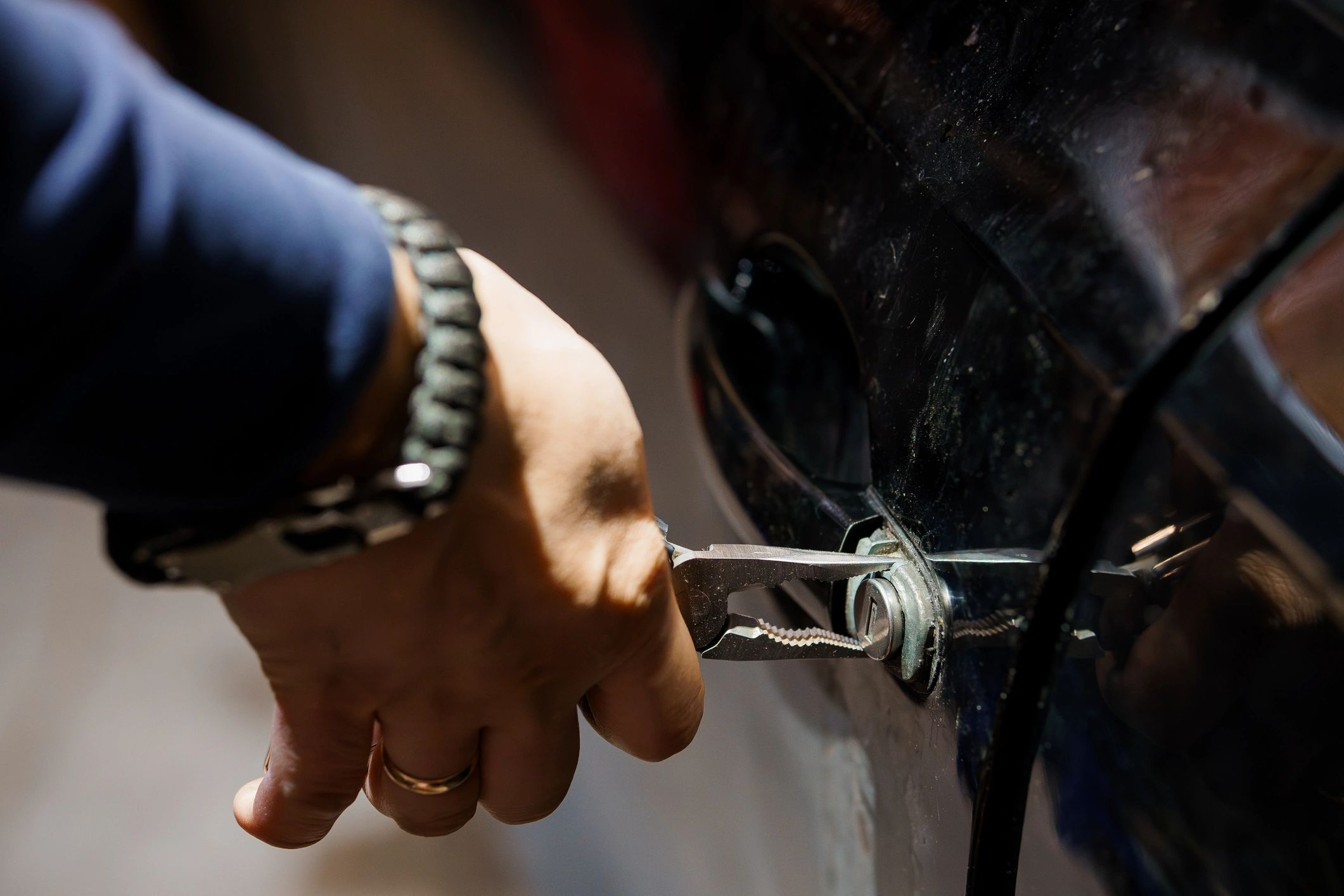

A vehicle lockout can be urgent, but emergency access and non-destructive car entry are not opposites. Emergency describes why access is needed; non-destructive describes the aim of opening the vehicle without damaging it.
An auto locksmith chooses a method to suit the vehicle and its security system. Traditional lock picking does not operate electronic locks, and forcing a door or using improvised tools can damage the vehicle or its locking parts.
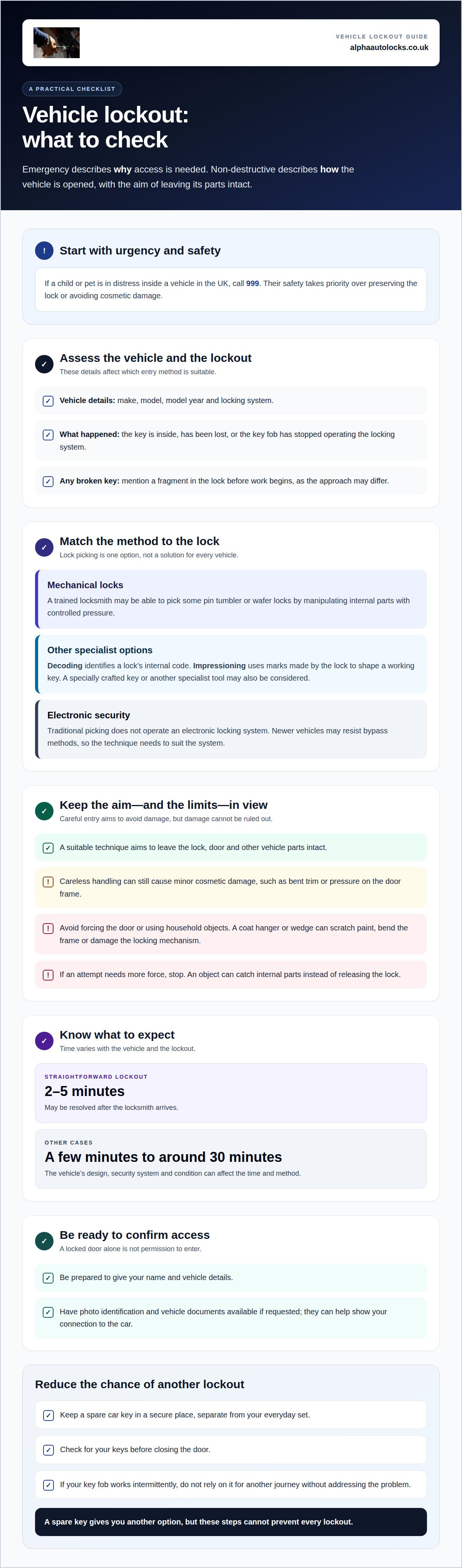
This guide explains how lock picking works, why a careful non-destructive approach may be preferred, when emergency circumstances change the priority, and how these options differ from risky DIY attempts. If a child or pet is in distress inside a vehicle in the UK, call 999.
Key Takeaways
- The vehicle’s design and security system affect which entry method is suitable and how long it may take.
- Lock picking moves parts inside a mechanical lock, while other specialist methods suit different lock designs.
- A careful entry attempt can still cause minor cosmetic damage, so improvised tools are a risky choice.
- Access is only one part of a lockout: lost keys, broken fragments and keys that need programming may need separate help.
What Is Non-Destructive Entry?
Non-destructive entry means opening a locked vehicle while aiming to leave its lock, door and other parts intact. The method depends on the vehicle’s locking system, rather than forcing the door.
What Vehicle Entry Involves
Non-destructive car entry uses specialist techniques to gain access without breaking the lock or damaging the vehicle. The locksmith first considers the make, model, model year and locking system, because these affect which method is suitable. The process may involve tools that work with the lock or a method that bypasses it. A straightforward lockout may take 2 to 5 minutes to resolve after the locksmith arrives; other cases can take from a few minutes to around 30 minutes.
Lockouts happen when keys are left inside, lost, or a key fob stops operating the locking system. The vehicle’s design matters: a method suited to one model may not suit another, particularly when electronic security is involved. A locksmith uses this assessment to choose an approach intended to preserve the vehicle’s existing parts.
Avoiding Damage During Lockouts
To avoid damage, a trained professional uses tools and a technique suited to the vehicle, instead of forcing the door or inserting improvised objects. Careful handling matters because pressure in the wrong place can bend trim or affect the door frame. Non-destructive methods aim to leave the lock and vehicle parts intact, although an attempt may still cause minor cosmetic damage if handled carelessly.
To establish that you’re entitled to access, expect to give the locksmith your name and vehicle details. Have photo identification and vehicle documents available if requested; these can help show your connection to the car. The locksmith can then assess the lockout and decide how to proceed without treating a locked door as permission to enter.
If a child or pet is in distress inside a vehicle in the UK, call 999. The immediate priority is their safety, not preserving the lock or avoiding cosmetic damage. For other lockouts, tell the locksmith whether a key is inside, missing, or whether the key fob has stopped working. Those details help distinguish an access problem from a fault with the key or locking system.
Lock picking
Lock picking uses specialist tools to manipulate parts inside a mechanical lock without its key. The locksmith applies controlled pressure to move the lock’s internal components, with the aim of turning the lock without breaking it or forcing the door. It requires skill, not simply pushing a tool into the keyway and twisting.
A trained locksmith may be able to pick some mechanical pin tumbler or wafer locks. Vehicle locks vary by make, model and security design, so the same method will not suit every car. The locksmith assesses the lock first and may choose another professional entry method if picking is unsuitable.
Picking is only one possible method. Other approaches include decoding a lock, key impressioning, or using a specially crafted key or specialist tool. Decoding identifies a lock’s internal code; impressioning uses marks made by the lock to shape a working key. The right option depends on the vehicle’s locking system and the access problem.
Electronic locks require a different approach. Traditional picking does not operate an electronic locking system, and some newer vehicles have security designed to resist bypass methods. A locksmith chooses a technique suited to the electronic system instead of trying to manipulate a mechanical lock that is not present. Some modern locks also resist bump-key methods, which are distinct from picking.
Picking aims to preserve the lock, but it isn’t a universal solution. The vehicle’s lock type, security features and condition determine whether it’s suitable. If you’re locked out, vehicle lockout guidance can help you understand the next step without trying improvised tools.
Risks of DIY lockout methods
A coat hanger or wedge can scratch paint, bend a door frame or damage a locking mechanism. Newer vehicles may also have electronic security that a simple tool cannot bypass. An object pushed into the door can catch internal parts instead of releasing the lock, turning a straightforward lockout into a repair problem.
Non-destructive car entry depends on using a technique suited to the vehicle. A locksmith assesses the lock and uses tools designed for vehicle entry, which offer more control than household tools. Forcing a gap wider can put pressure on the door frame, while blindly twisting a tool can harm the lock. Stop rather than applying more force.
A few habits can reduce the chance of a lockout. Keep a spare car key in a secure place separate from your everyday set, and check for your keys before closing the door. If your key fob works intermittently, do not rely on it for another journey without addressing the problem. These steps cannot prevent every lockout, but a spare key gives you another option.
If you are locked out, a vehicle lockout service can assess the car and choose an appropriate entry method. Tell the locksmith the vehicle’s make and model, its location, and whether the key is inside, lost or faulty. If a key has broken in the lock, mention that before work begins, as the approach may differ from one used for keys left inside.
Mobile help is useful when the vehicle can’t be driven because access is blocked. A trained locksmith can attend the vehicle with specialist tools, rather than asking you to force the door or keep trying household methods. Once access is restored, consider keeping a spare key securely available for the next journey.
Emergency entry versus non-destructive entry
Emergency entry describes why access is needed; non-destructive entry describes how a vehicle is opened. A routine lockout can call for non-destructive methods, while an emergency may make immediate access more important than preserving the lock. The terms are not opposites. A locksmith assesses the urgency, vehicle security and condition of the locking system before choosing an approach.
For keys locked inside a car, a non-destructive method aims to open the vehicle without damaging its door or lock. Lock picking may suit some mechanical locks, but it is not a universal solution, particularly for vehicles with advanced electronic security. The practical question is whether a careful method can provide access in time.
If a child or pet is in distress inside a vehicle in the UK, call 999. In that situation, emergency services take priority; don’t delay the call while weighing damage to the vehicle. Tell the operator where the vehicle is and what is happening. For other lockouts, a mobile locksmith can assess the circumstances and select a suitable entry method.
Destructive entry may be considered when non-destructive methods are unsuitable or the lock mechanism is already damaged. Breaking or drilling a lock can mean replacement and further repairs, so careful entry is preferable where it can provide access. The decision depends on the vehicle’s security, the lock’s condition and the urgency.
The clear takeaway: emergency describes the urgency, not a specific technique. When there’s no immediate threat, preserving the lock and vehicle parts is usually the sensible aim. If you need help with a vehicle lockout, arrange vehicle entry assistance and explain whether anyone is at risk inside.
Alpha Auto Locks
Alpha Auto Locks provides mobile help when a vehicle lockout, lost key or broken key fragment leaves you without access. Vehicle lockout service uses non-destructive car entry tools to open your vehicle. Lost car key replacement and key programming can help when a key is missing or no longer works, and broken-key extraction removes a fragment stuck in the lock or ignition.
Explain whether your keys are locked inside, lost, broken or failing to operate the vehicle. That detail helps identify whether you need entry, a replacement key, programming or extraction. Alpha Auto Locks provides mobile auto locksmith services in Essex, Kent and Hertfordshire, around the clock.
Contact Alpha Auto Locks to discuss the issue with your vehicle.
Choose the right next step for your vehicle
The next step depends on whether the problem ends when the door opens. If your key fob still fails, the lock sticks, or the keys are missing, access alone may not address the cause. Treat these as separate issues: a vehicle lockout needs entry, while a lost key may call for replacement and programming. That distinction helps you explain what’s happening and focus on restoring dependable use of your vehicle, rather than relying on a temporary workaround.
Alpha Auto Locks’ trained technicians can assess a lockout, lost car key or key-programming issue and explain the relevant help. For non-destructive car entry, the aim is to regain access using a method suited to the vehicle and circumstances. Contact Alpha Auto Locks to discuss your vehicle problem. A clear account of what’s gone wrong gives the conversation a practical starting point, so you can take the next step with confidence.
Frequently Asked Questions
Who to call: police, AA/RAC, or an auto locksmith?
For a routine lockout, contact an auto locksmith. AA or RAC patrols may be able to help with some vehicle lockouts, depending on the vehicle, shift and available tools. If someone is in immediate danger, contact emergency services. If the vehicle is undriveable, roadside assistance may be more appropriate than a lockout service.
Will non-destructive techniques work on modern high-security locks?
High-security features can affect which entry method suits a vehicle. Give the locksmith the make, model and model year, as well as details about any damaged lock or faulty key fob. This helps assess the locking system and choose an appropriate method. If the lock is damaged, restoring access may not fix the underlying fault.
What does non-destructive car entry mean?
Non-destructive car entry describes the intended result, not one fixed procedure: gaining access while aiming to preserve the vehicle’s lock and parts. The technique depends on the car and its locking system. Consider whether you need access alone or also help with a lost, broken or faulty key.
Who can legally gain access to a car in the UK?
An auto locksmith can help with access to a vehicle you own or use with permission. Be ready to explain your connection to the vehicle and provide relevant details, such as its registration and your identification. If permission to access the car is disputed, resolve that issue before arranging entry. This is practical guidance, not a determination of anyone’s legal rights.
What should I do if I've locked my keys inside my car?
Check calmly whether another door is already open, without forcing a handle or window. If every door is locked, stop trying improvised tools and contact an auto locksmith. Tell them where the vehicle is and whether the key fob has stopped working. If a child or pet inside is in distress, treat the situation as an emergency rather than a routine lockout.


